Managing screen time is one of the biggest challenges modern parents face. With devices everywhere -- school, home, friends' houses -- it can feel impossible to set limits that actually stick.
This guide breaks down what the research says and gives you practical steps to build healthier habits.
What the experts recommend
The American Academy of Pediatrics (AAP) provides age-based guidelines:
- Under 2 years: Avoid screens except video calls with family.
- 2 to 5 years: Limit to 1 hour per day of high-quality content, co-viewed with a parent.
- 6 years and older: Set consistent limits that don't interfere with sleep, physical activity, or face-to-face interaction.
The key takeaway: not all screen time is equal. An hour of educational content is very different from an hour of endless scrolling.
Quality vs. quantity
Instead of obsessing over total minutes, focus on what your child is doing on-screen:
- Active use (creating, learning, communicating) is generally positive.
- Passive consumption (scrolling feeds, watching random videos) tends to be less beneficial.
- Interactive co-viewing -- watching together and discussing -- turns passive time into active learning.
Practical tips for setting limits
1. Create a family media plan
Sit down together and agree on rules. Kids are more likely to follow limits they helped create. Cover:
- Which apps are allowed on school days vs. weekends
- Screen-free zones (dinner table, bedrooms)
- A daily or weekly time budget
2. Use tools, not just willpower
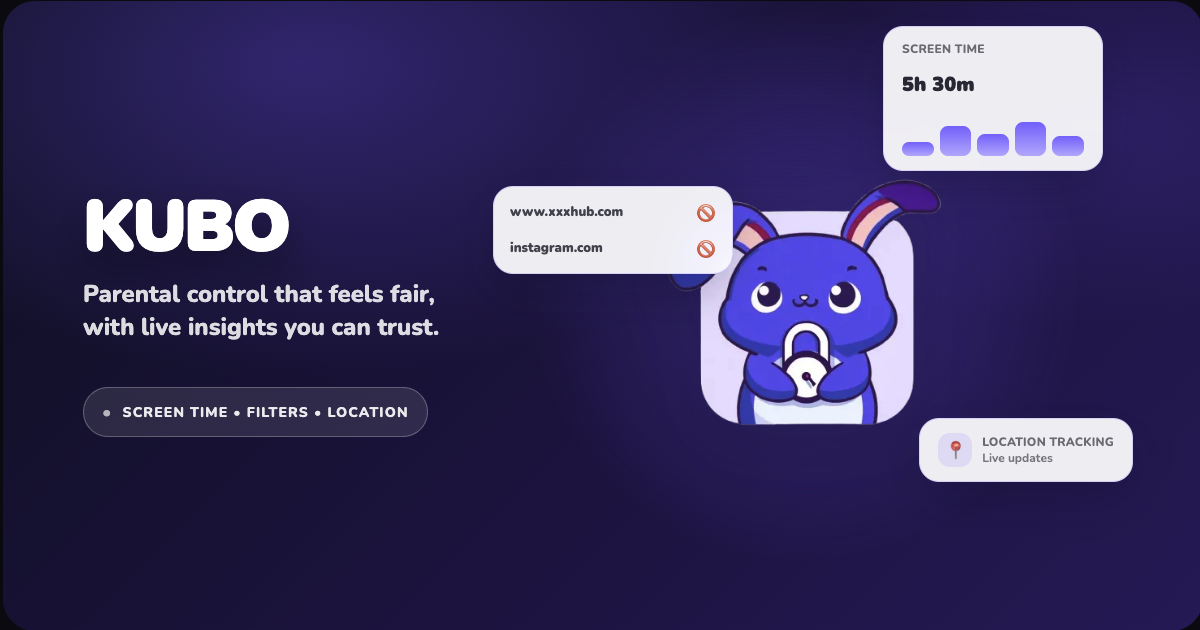
Parental control apps like Kubo let you enforce limits automatically. Instead of constant negotiation, the rules run in the background:
- Block distracting apps during homework time
- Set daily time caps per app
- Filter unsafe web content
3. Model the behavior you want
Kids notice when parents are glued to their own phones. Set your own screen-free times and be open about it.
4. Focus on sleep
The single most impactful rule: no screens 1 hour before bedtime. Blue light and stimulating content both interfere with sleep quality, which affects everything from mood to school performance.
When to worry
Some signs that screen time may be becoming a problem:
- Resistance or meltdowns when devices are taken away
- Declining interest in offline activities
- Sleep problems
- Falling grades or reduced attention span
If you notice these patterns, it may be time to reset boundaries -- gradually, not all at once.
The bottom line
There is no magic number of minutes that works for every family. The goal is balance: enough technology to learn and connect, with enough offline time for play, sleep, and real-world relationships.
Start with one small change this week. Maybe it is a screen-free dinner, or a 30-minute daily cap on social media. Small, consistent steps add up.